|
|
|
|
Phobias & Delusions
- Help is available but the most
important thing is to recognize the problem -
|
Summary: Phobias and delusions can
be mild to serious psychological disorders that
should normally be treated by the medical
community. In cases where insects, mites or
"bugs" are involved, entomologists are sometimes
asked to investigate.
Jack DeAngelis, PhD
OSU Ext. Entomologist (ret.)
|
|
Difference between delusion & phobia
Two different conditions are recognized
that relate to an excessive fear of
arthropods like insects and spiders. The first Entomophobia
("entomo" = insect + "phobia" = fear) refers
to an unreasonable fear of real arthropods.
The key here is that the fear involves a real
stimulus such as an insect or spider,
encountered in everyday activities. For example, a
spider might trigger this intense fear. The
good news is that entomophobia is highly treatable
and generally only a significant concern if it
limits someone's everyday activities.
Second, there's a much more
serious condition called delusions of
parasitosis (DOP), which causes a severe and
debilitating reaction to an imagined (not real)
infestation. In general delusions are false
beliefs and in this case the person believes,
wrongly, that they are infested with an insect or
mite, or that they are being repeatedly bitten (see
additional signs below).
|
|
|
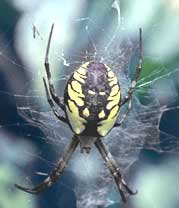
A harmless garden spider
can provoke irrational fear in some
people.
|
|
|
|
The mistaken belief, or delusion, can be
triggered by something as simple as an allergic
reaction, a chemical sensitivity, emotional stress
or even recreational drug use. As with other
delusional disorders, professional psychological
counseling is generally needed. See this UC Davis site for clinical
definitions and treatment suggestions.
Entomologists are sometimes asked to
investigate cases of mysterious bites that may
or may not have physical manifestations such as skin
lesions. These cases generally fall into two broad
groups.
Most are some type of "mistaken identity" in
which the person believes that some harmless insect or
spider is biting/stinging them. Usually any associated
skin irritation has an environmental explanation. In a
small percentage are cases, however, the person has an
unshakable belief that they are infested with an
unseen "bug" and all attempts to find and identify the
culprit have failed.
|
|
|
All such complaints should at least initially
be investigated with the underlying assumption that a
real arthropod infestation is present. There
are a number of insects and mites that can cause real
skin reactions and lesions (see Causes
of Mysterious Bug Bites for a list of some real
culprits). For example, bird/rodent/nest mites cause
bites that can be very difficult to diagnose (see Bird Mite Bites). The
following signs, however, are indicative of imagined
infestations in my experience:
|
|
|
Signs of DOP (this is my own list and is not
exhaustive)
- believes bites or skin lesions are from unknown
or unseen causes
- believes that home or workplace are "infested", in
addition to a "personal infestation"
- reports having resorted to self-treatment
with insecticides or other harsh chemicals (bleach,
kerosene)
- has fear for others "becoming infested" which
leads to self-imposed isolation
- has had multiple, unsatisfactory contacts with the
medical or pest control community
- may have abandoned home because of the
"infestation"
- reports that "bugs" are invisible or vanish
after capture
- submits elaborately wrapped samples, often
with very detailed collection information
- submits samples of body tissue or swabs
Delusions
of Parasitosis - This file contains references
to DOP from the scientific literature compiled in
1997.
Mites
That Bite Guide - There are a number of very
small mites that actually bite and cause skin lesions.
These causes must be excluded before a diagnosis of
DOP can be made.
|
|
|
Don't forget to bookmark us for next time - press
ctrl-D in most browsers.
|
|
|
|
Mission: To provide accurate, up-to-date and
unbiased information for solving common insect and
mite problems around your home, business and landscape
using least-toxic methods.
Please see the Disclaimer
statements as well.
|
|
|
|
Copyright © 2004-...
LivingWithBugs, LLC. All rights reserved.
|