
Pubic Lice or Crab Lice (Pthirus pubis)
-- Tiny, biting insects that resemble crabs --
Summary: Pubic lice, sometimes called genital crabs or crab lice, are tiny, blood-sucking insects that cause intensely itchy lesions where they bite. Pubic lice attach their eggs (nits) to the coarse hairs of the groin, armpits and sometimes eyebrows hence these are the areas where live lice and bites occur. The common name "crabs" come from their overall shape and prominent grasping claws that are used to grab hairs.
How to identify pubic lice (Pthirus pubis)
Pubic lice are tiny (1-2 mm) blood sucking insects. The common name pubic louse ("louse" is the singular form of the word "lice") comes from where they are typically found -- in the pubic area of infested individuals but they may also be found in armpit, chest and eyelash hair, anywhere the hair is course enough for the lice to hang onto.
The other common names crab louse comes from their overall shape as well as the two pairs of enlarged claws, features which resemble real crabs. These modified claws are adapted for grasping coarse pubic hairs. This tiny insect has been a highly specialized "companion" of humans, and some of our primate cousins, since before recorded history.
other common names: crabs, genital crabs, crabs std; misspelling: public lice
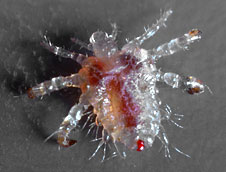
Pubic/crab lice bite to get blood. The bite leaves an intensely itchy lesion but, unlike some other blood-feeding insects, pubic lice do not transmit diseases. Scratching to relieve the intense itch can result in secondary infections, however. Pubic lice are found worldwide and are frequently (but not always) spread through sexual contact.
Pubic lice attach eggs, or nits, to individual hairs
The eggs, or nits, of all human lice (head lice, body lice and pubic lice) are about 1 mm long and are either glued onto individual hairs, as in head and crab lice, or are laid on clothing, as in body lice. Nits need body heat in order to hatch. Nits generally hatch in seven to ten days which is why some treatment protocols require re-treatment at this interval. Lice molt through several immature stages before becoming adults.
How to treat pubic lice
Pubic lice, like head lice, do not live for long off their host so treatment of your home and clothing is not as important as treating the infestation itself. Treat pubic lice as you would head lice with medicated lice shampoo and nit-combing (see How To Treat Lice). Since lice are highly contagious sexual partners, and in fact anyone who comes into direct contact with an infested person, should be informed and possibly treated as well.
Over-The-Counter (OTC) shampoos and lotions containing permethrin, like Nix (tm), or pyrethrins, like RID (tm), should be the first-line treatments for lice since they don't require a doctor's prescription and are relatively inexpensive. Be sure to follow instructions carefully as treatment failures are often traced to misapplication. If these treatments do fail, as they sometimes will, the next line of defense are new prescription-only treatments such as Natroba (tm)) that contain spinosad. Some of these new prescription-based protocols are so effective that nit-combing is no longer needed but they are very expensive.
Supplies
Professional-level pest control supplies are generally not available in home and garden stores but can be found at DoMyOwn.com, our affiliate.

How to search 'Bugs for more information
The easiest way is to open a Google search page and type: "your query" + site:livingwithbugs.com into the search box. For example, to find all 'Bugs articles about carpenter ants type: carpenter ants + site:livingwithbugs.com in the search box.
The resulting list of pages may contain some Google advertising (marked with "Ad" next to the URL) as well relevant pages from 'Bugs. The ads do not originate with 'Bugs.