Our House


Homeowners & Insecticides

- Use the safest possible -

Summary: Homeowners now have many choices for "do it yourself" pest control. Some choices are safe and effective while others are not. Use these suggestions to sort through the fog.

Jack DeAngelis, PhD
OSU Ext. Entomologist (ret.)

Many insecticides are now available in homeowner-sized packaging. Because you have so many choices it can be very confusing. We've tried to simplify the process of selecting products below. We have not listed every possible option but rather listed those that are safe, effective and available to homeowners.

Our belief is that pesticides should only be used when absolutely necessary. Choose products that are effective, low toxicity and have low environmental impact (biorational). The good news is that products exist that meet these criteria and are now available to homeowners.

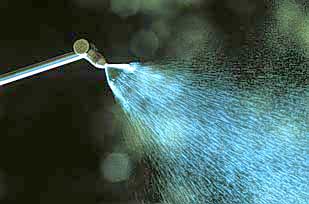
sprayer nozzel and spray droplets from a garden sprayer
 
Choose carefully, do your homework and you'll be able to deal with your pest situation in safe and effective ways.

We've only listed relatively low toxicity materials. However, despite some label instructions, we do not generally recommend using insecticides indoors in residential applications. Exceptions to this rule are some of the new botanical insecticides and some inorganic dusts which can be safely used indoors for a variety of pests. See label instructions for these applications. As with any insecticide, please read and carefully follow these instructions.

Be sure to check the product label instructions for proper use. Pesticide use is regulated by local and national laws in most countries. It is your responsiblity to operate within the laws of where you live.

Legal Issues If you engage in pest management activities you must follow local laws regarding these activities. As a general rule, if you apply pesticides on property that you don't own you'll need to be licensed. Application on public property also generally requires a license. "Applicator licenses" are typically administered by local agriculture departments, or their equivalent.

Baits -- borate-based baits for household nuisance ants; commercial cockroach baits; iron phosphate-based slug and snail bait; carpenter ant baits

Borates -- borate insecticides for structural pests and dry rot

Essential oils (botanicals) -- botanical insecticides are now available in a variety of formulations for use against a vaiety of pests

Insecticidal soap -- insecticidal soap for soft bodied pests like aphids, spider mites and scale crawlers

Insecticidal dusts -- silica dusts (amorphous and diatomaceous earth) or botanical dusts for crawling pests like bed bugs

Microbials -- fungus gnat control with Bti

Neem oil -- neem oil for chewing pests in the garden and landscape

Nematodes -- entomopathogenic nematodes for root weevils, mole crickets and other lawn pests

Repellents -- repellents for mosquitoes, ticks and black flies

Traps -- traps for codling moth, Indian meal moth, and fruit flies; spider traps; horse fly traps; Japanese beetle traps; yellowjacket wasp traps; black light traps for flies

Others -- specialized products for individual pests

Google


Mission: To provide accurate, up-to-date and unbiased information for solving common insect and mite problems around your home, business and landscape using least-toxic methods.

Jack DeAngelis, Ph.D.

Please see the Disclaimer statements as well (sorry, but these are necessary).


Copyright 2004-2007 livingwithbugs.com. All Rights Reserved. Page Updated: 10/18/2007