|
|
|
|
House Centipedes
- Sometimes called "hundred-leggers"
-
|
Summary:
There are many species of centipedes that range in
size from small to very large. They all have
multiple pairs of legs and all are predators. Most
centipedes are found outdoors however one, the house centipede,
is commonly found indoors. The house centipede is
harmless but like any large arthropod can bite.
Jack DeAngelis, PhD
OSU Ext. Entomologist (ret.)
my resume
|
|
Centipedes
are not insects
Centipedes
[see photo right; more pictures of centipedes] are
elongate and somewhat flattened predatory
arthropods. Centipedes have a single pair of legs on
each of their body segments whereas millipedes
(Diplopoda) have two pair per segment. They range in
size from very small (4 mm ~ 1/8") to very large
(150 mm ~ 6"). Larger centipedes can inflict a painful but
non-venomous bite.
As
predators, centipedes are beneficial to gardeners
and no attempt should be made to control them
outdoors. They feed on a variety of small prey many
of which are garden pests. Wear gloves when working
around wood piles and other debris where centipedes
are found to protect your hands from bites.
|
|
|
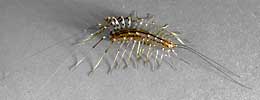
house centipede
- notice long, delicate legs and
antennae; head is to the right; common
names & misspellings: "hundred
leggers", "hundred-legged worms",
centepede
|
|
|
House centipedes
The house
centipede (above right) has unusually long,
fragile legs and is the only
centipede that lives in houses, however other species
can occasionally wander indoors. The house centipede
occurs in southern Europe, eastern Canada and the
US. This centipede is about 1-1/2" long and inhabits
damp areas of houses, it is harmless but frightens
many homeowners.
House
centipedes tend to occur in damp, undisturbed
areas of homes like basements and generally no
control is needed. If, however, you do decide to
control these arthropods here are some suggestions:
|
House centipede control in homes
If possible
dry out damp areas and clean up any debris where
centipedes might hide. Insecticidal dusts (see Using
Natural Dusts in Home Pest Control) can be used
in dry areas. Either borate or silica dust will be
effective as long as it remains dry. Damp areas can be
treated with one of the new plant-based botanical
insecticides (see Using
Botanical Insecticides).
Another option is to deploy sticky
traps, the ones
that are used for spiders, in areas where you
find centipedes. These traps (see Spider
Traps) can be home-made or purchased ready made.
Replace traps when they become covered with debris.
|
|
|
Don't forget to bookmark us for next time - press ctrl-D in most
browsers.
|
|
|
|
Mission: To provide accurate, up-to-date and
unbiased information for solving common insect and
mite problems around your home, business and landscape
using least-toxic methods.
Please see the Disclaimer
statements as well.
|
|
|
|
Copyright © 2004-...
LivingWithBugs, LLC. All rights reserved.
|