|
|
|
|
Methoprene
-
Provides
long-term control of fleas
-
|
Summary:
Methoprene is an insect growth regulator (IGR),
a very low toxicity chemical that prevents
immature flea larvae, and other insects, from
completing development and reaching the adult
stage. Methoprene is long-lasting, inexpensive and
relatively safe to use.
Jack DeAngelis, PhD
OSU Ext. Entomologist
(ret.)
|
|
What is methoprene**?
Methoprene is a chemical that interferes
with the development of insects and some closely
related arthropods. There are a number of similar
chemicals that act this way and they are all
called insect growth regulators (IGRs)
because they stop normal insect growth and
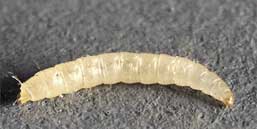
development. So, for example, if a larval flea
(right) is exposed to methoprene it will not
complete development to an adult flea and
will eventually die. Manufacturers often refer to
this as "breaking the flea's life cycle".
** also sometimes called by the trade
name Precor
|
 |
|
Flea larva.
Methoprene is a chemical that prevents this
stage from developing into an adult flea.
|
|
|
|
Methoprene is practically non-toxic to
mammals, including us, so is generally safe to use.
It is widely used for flea, mosquito and fly control
either alone or in combination with another
insecticide. Related chemicals like hydroprene
are used in baits for nuisance ant control. On a negative note, if IGRs get into marine
(salt water) ecosystems such as bays or estuaries
these chemicals can also interfere with the growth
and development of marine arthropods such as crabs
and lobsters.
Why insect growth regulators work
Roughly 75% of fleas in an active
infestation are in the larval stage -- the
stage you never see. Since exposure to these
chemicals prevents larvae from becoming adult fleas,
an IGR alone could eventually get rid of an
infestation. But because IGRs don't control
adult fleas you would have to wait until the
adults died off on their own. This is why IGRs are
sometimes combined with a conventional insecticide
to quickly control the adult, biting fleas.
|
|
Using methoprene for flea control
Methoprene should be used to treat pet
bedding, carpets, and other areas where pets sleep
since this is where flea larvae are found.
Methoprene can be used in addition to
topically-applied flea and tick control medications
like Frontline Top Spot (see How
To Safely Control Fleas In Homes and On Pets
for step by step flea control). Methoprene
is very long-lasting and should only be needed a few
times per year. Follow package instructions
carefully. Do not apply methoprene to pets --
these products are intended for treatment of the
pet's living space.
IGRs are generally available in both hand-pump
sprayers and pressurized aerosols. I
prefer hand-pump sprayers because they are more
economical and easier to control than aerosol
sprays. Pump sprayers also produce a larger droplet
size which is less likely to float in the air and
get up your nose during treatment! A hand-pumped formulation of methoprene is available here from DoMyOwn.com, our affiliate.
Identification and
Life Cycle of Fleas
|
|
|
Don't
forget to bookmark us for next time - press ctrl-D
in most browsers.
|
|
|
|
|
Mission: To provide accurate,
up-to-date and unbiased information for solving
common insect and mite problems around your home,
business and landscape using least-toxic methods.
|
|
|
|
Copyright ©
2004-... LivingWithBugs, LLC. All
rights reserved.
|
