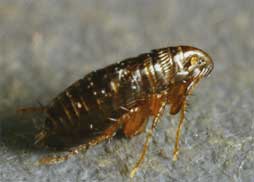
Homemade flea traps
The easiest homemade trap is a small light bulb suspended over a bowl of soapy water. The light will provide the heat and light necessary to attract adult fleas. Fleas that jump toward the light will fall into the soapy water. A few drops of dish soap in a pint (500ml) of water will do. If possible use a low voltage bulb such as the 6v or 12v bulbs used in cars as this will reduce the chances of electric shock. In fact, if you are electrically handy a 6v system could be made to run off a small battery bank.
Should I use flea traps at all?
Probably not unless you manage a kennel or similar facility. In
terms of eliminating fleas, flea traps don't work
very well because they only trap a small fraction of the
flea population. The best approach to flea control
is to use flea medications
like Frontline (tm) that are
applied directly on the animal, combined with
treating bedding with methoprene or Precor (DoMyOwn is our affiliate). If the flea medications are too
expensive then the next best approach is to combine
regular flea shampooing and combing with
treatment of bedding with methoprene (see How
to Control Fleas & Ticks).
There is, however, one good use for flea
traps. Since they do trap fleas they can be used as
an early warning system. In large facilities,
like kennels, a small flea infestation may go
unnoticed. By placing a few traps around you may uncover a
small, easily controlled infestation, before it gets
out of hand.
Traps can be messy and difficult to maintain. Soapy water traps should be emptied and refilled periodically and sticky trap surfaces must be cleaned or replaced. My best advice for homeowners is to skip flea traps and stick to regular flea combing as the best way to detect a flea infestation.
Ways to Support 'Bugs
If our information is useful please visit the Support Page for ways you can help keep the site growing.
Related Articles
How to Control
Fleas With New Medications
Using
Methoprene to Disrupt Flea Development
|